Forklift Rental in Johannesburg: The Ultimate Guide for 2026

Managing a warehouse, a construction site, or a massive distribution warehouse in a place like Kempton or Germiston is a bit like conducting a very loud, very heavy orchestra. Everything has to move in sync. When one “instrument”, say, a 3-ton diesel forklift, decides to stop working, the whole performance grinds to a halt.
If you’re reading this, you’re likely weighing your options. Should you sink a massive chunk of capital into buying a fleet, or does renting make more sense for your current bottom line? The material handling world has changed a lot lately, especially in Gauteng’s industrial hubs like Isando, City Deep, and Alrode.
Let’s break down the reality of forklift rentals, from the costs to the common headaches you’ll want to avoid.
The Big Question: Why Rent at All?
The most obvious reason people rent is cash flow. Buying a new, high-spec forklift is a significant investment. For many businesses, especially those scaling up or dealing with seasonal peaks, tying up millions in depreciating assets doesn’t make sense.
In the current South African market, you can get a daily forklift rental starting from around R720 per day. If you’re looking at the long game, a long-term agreement on a brand-new machine can work out to less than R7,200 per month. When you compare that to the outright purchase price and the unpredictable cost of parts, the math starts to look very attractive.
But it isn’t just about the monthly check. It’s about flexibility.
The Flexibility Factor
Business isn’t static. One month you might be moving light pallets of electronics in a narrow-aisle warehouse; the next, you might have a contract that requires moving heavy machinery components.
- Short-term (1 day to monthly): Perfect for emergency breakdowns or sudden spikes in volume.
- Long-term (12 to 60 months): This is where you get into Full Maintenance Leasing (FML). You get a new machine, fixed costs, and zero stress about repair surprises.
Navigating the Pain Points: What Could Go Wrong?
Even the best rental agreement can turn sour if you aren’t prepared for the common pitfalls. If you’ve spent any time on a shop floor, you know that “simple” rentals are rarely simple.
1. The Maintenance Nightmare
The biggest fear with renting is that you’re getting someone else’s problem. A forklift that’s been poorly maintained by the previous renter is a ticking time bomb. When it breaks down on your watch, your productivity drops to zero, but your labor costs keep ticking.
- The Solution: Only work with providers who pride themselves on a fleet in excellent condition. Look for companies that offer 24-hour backup services. If a machine goes down at 2:00 AM in a City Deep cold storage facility, you need a technician who’s going to show up.
2. The “Wrong Tool” Syndrome
Not all forklifts are created equal. Using a petrol/gas forklift in a poorly ventilated indoor food warehouse is a health hazard. Using a small electric stacker on the rough, uneven ground of a mining site in Gauteng is a recipe for a broken axle.
- The Solution: Be specific about your environment. Do you need a 1.5-ton electric for nimble indoor work or a 16-ton diesel beast for heavy industrial lifting? Don’t guess – ask for a site assessment or a product demonstration.
3. Hidden Costs (The “Fine Print” Sting)
The daily rate is rarely the final number. You have to account for:
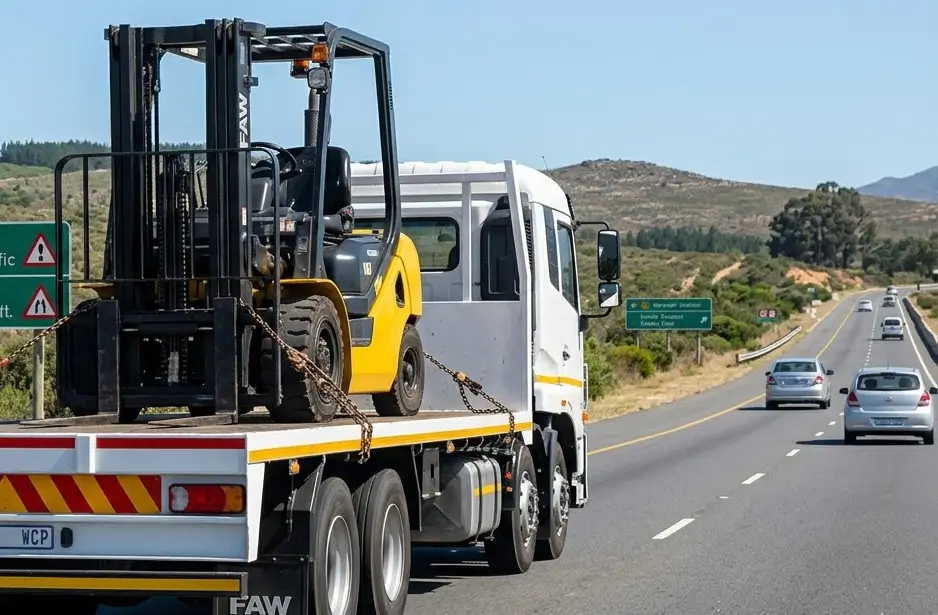
- Transport: Getting a 15-ton forklift to your site requires specialized low-bed transport.
- Insurance: Accidents happen. If a driver clips a racking system, you don’t want to be on the hook for the full value of the machine.
- Fuel/Power: Who’s paying for the diesel or the electricity to charge the Lithium-Ion batteries?
4. Operator Incompetence
A forklift is only as good as the person behind the wheel. We’ve seen countless “rental failures” that were actually just cases of untrained operators burning out clutches or damaging masts.
- The Solution: Some rental packages include skilled operator assistance. If you don’t have a certified, experienced driver on staff, it’s often cheaper to “rent” the driver along with the machine.
Understanding the Fleet: What’s on the Menu?
When you call up a place like Value Materials Handling in Isando, you aren’t just asking for “a forklift.” You’re choosing from a massive range of engineering.
Internal Combustion (IC) Forklifts
These are your workhorses. Ranging from 1.8 ton to a massive 45 tons, these run on Diesel or LP Gas.
- Best for: Outdoor yards, heavy manufacturing in Alrode, or the demanding environments of Gauteng’s mining sector.
- Pros: They are powerful and don’t need “charging” time – just refract or swap the gas bottle.
Electric & Lithium-Ion
The industry is moving toward Lithium-Ion fast. Unlike old Lead-Acid batteries that require “watering” and long charging cycles, Lithium-Ion allows for “opportunity charging” (plugging it in during a lunch break).
- Best for: Indoor warehouses, food and beverage industries, and 24/7 operations where you can’t afford a machine to sit idle for 8 hours while it charges.
Specialized Warehousing Equipment
Sometimes a standard forklift is too bulky. This is where you look at:
- Reach Trucks: Essential for high-density racking (up to 13 meters).
- Pallet Stackers & Order Pickers: For when you need to move smaller loads or pick specific items for retail.
- Rough Terrain Forklifts: If you’re operating on a farm or a mine where “pavement” is a luxury, you need the big tires and high clearance of a rough terrain model.
Location Matters: Gauteng’s Strategic Hubs
The needs of a business change depending on where they are on the map. South Africa’s logistics backbone is centered right here in Johannesburg.
City Deep: The Inland Port
City Deep is the heart of container traffic. It’s fast-paced and high-volume. If you’re operating here, you need equipment that can handle cargo and container handling without breaking a sweat. Short-term, flexible rentals are popular here because the volume of freight can change overnight.
Alrode: The Industrial Heartland
Alrode is about manufacturing and steel. The demands here are heavy-duty. You aren’t just moving boxes; you’re moving raw materials and heavy machinery. Reliability is everything because a factory line stopping for an hour can cost hundreds of thousands of Rand.
Agriculture and Agribusiness
Out toward the fringes of Jo’burg, the needs shift to farms and packhouses. Here, you need forklifts that can handle fresh produce gently but are durable enough for farm environments. Pallet trucks and stackers are the stars of the show in cold storage and silos.
The Mining Sector
Mining is the ultimate stress test for equipment. Between gold and platinum operations, the machinery needs to be robust. We’re talking high-capacity lifts (16-ton plus) and rough terrain capabilities.
The “Value” of Experience
It’s worth noting that who you rent from matters as much as what you rent. Value Materials Handling, for instance, isn’t a new kid on the block. Being part of the Value Group (founded in 1981 by Steven Gottschalk) means there’s over four decades of supply chain infrastructure behind every rental.
When you rent from a company with a national footprint, you’re getting more than a machine. You’re getting a 24-hour call center, a massive inventory of parts, and the peace of mind that comes with a partner who understands the South African industrial landscape.
Final Thoughts: Making the Choice
If you’re looking to keep your costs predictable and your fleet modern, renting is a no-brainer. You avoid the “repair cost surprises” and the headache of disposing of an old, beaten-up machine five years down the line.
Before you sign that rental agreement, ask yourself:
- Is the lifting capacity really enough for our heaviest load?
- Does the rental include full maintenance, or am I on the hook for wear and tear?
- Do we have the right power source (Diesel vs. Lithium) for our workspace?
- Can the provider reach us within two hours if the machine stops?
If the answer to those is “yes,” you’re in a good spot.
